Description Box :🔍
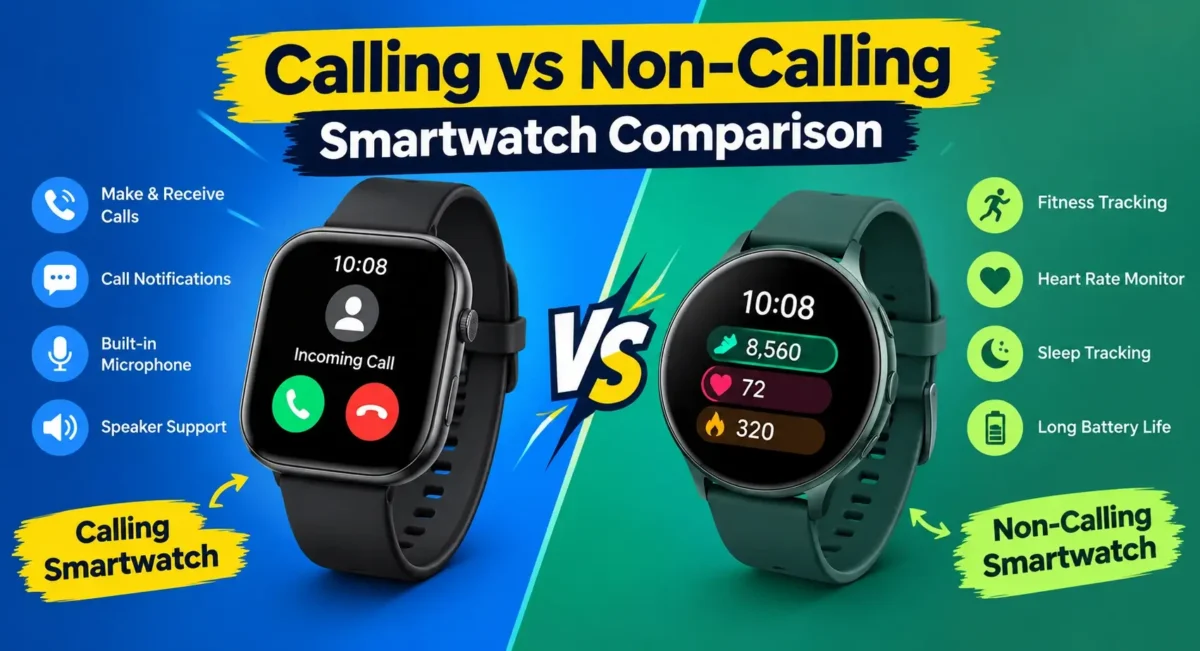
The choice between a calling smartwatch and a regular smartwatch in India boils down to connect versus battery life. Smartwatches with built-in microphone, speaker and Bluetooth calling chip for hands-free communication, which are priced in the budget range from ₹1,299 to ₹4,999 and from ₹25,999 to the premium LTE (long term evolution) models from Samsung Galaxy Watch8, come with varying features and specifications. Regular non-calling smartwatches only track health, they constantly monitor the GPS and their battery life is 7 to 14 days on a single charge.
A calling smartwatch is best if you need to communicate during exercise or commute, and a regular smartwatch would be best if you value the battery life and the uninterrupted fitness data. Plus, if you are analyzing devices through a smartphone side by side comparison india spec test, understanding these wearables is essential, just like following a proper smartwatch comparison guide.
Calling Smartwatch vs Standard Smartwatch : 🕵️♂️
Calling vs Non-Calling Smartwatch : Wearable technology in India has grown exponentially in the past few years. The wrist wearables with alluring AMOLED displays, 24/7 heart rate monitoring sensors, and shiny metal shells are everywhere you look—whether you’re reading a tech review at an electronics store or checking out at Flipkart or Amazon. As much as there is a fundamental fork in the road for Indian buyers when it comes to buying a watch, though: Bluetooth Calling Smartwatch vs Standard Non-Calling Smartwatch?
Bluetooth Calling Smartwatch : At face value, both form factors are the same, but actually the internal architecture, power consumption, day-to-day usage and price-to-performance ratios are very different. The wrong category can result in frustration, either because you are continually charging up or you end up with no hands-free and have to charge every time you get in/out of the car. This complete smartwatch comparison guide explains everything from technical and real-world differences, and you will be able to invest smartly for Indian usage conditions. To dive deeper into tech specs, readers often check out a detailed smartphone side by side comparison india spec test before making their final choice.
Verdict: The heart of the question is whether you’re looking for an extension to your smartphone/phone camera or a dedicated fitness and health device with minimal wear and tear.
Quick Overview: Calling vs Non-Calling (Standard) Smartwatches 🧧
It’s crucial to know the difference between these two product lines before getting bogged down in product details.
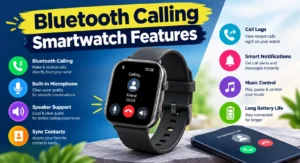
The Bluetooth Calling Smartwatch also has a built-in microphone, a mini speaker amplifier and a secondary audio Bluetooth profile (usually Bluetooth 3.0/5.3 dual-mode connection). This makes the watch deliver voice calls straight from the tethered mobile phone. High-end offerings can even include individual LTE e-SIM capabilities, allowing the device to make cell phone calls without needing to be connected to a smartphone.
A Standard Smartwatch (also known as a fitness tracker or typical sport watch) doesn’t have the dedicated voice transmission hardware or speaker unit. It is solely a display interface for the notifications sent to the smartphone (sms, whatsapp alerts, incoming call notifications with reject/mute), and it allows to dedicate the most part of its computational power to the biometric sensors, analysis of sleeping patterns and recording activities.
Section Verdict: Smartwatches are optimized for voice communication in real time, directly on the wrist, while traditional smartwatches are optimized for battery life, physical resilience, and continuous health monitoring, much like what you discover in any good smartwatch comparison guide.
Core Architectural Differences: How They Work Under the Hood?
Both devices are designed differently on an internal hardware level, which makes for their functional split:
1. Dual-Bluetooth Connectivity vs Single-BLE Connection
Historically, smartwatches used to have two separate chipsets – one Low Energy (BLE) and the other High-Bandwidth Bluetooth – the latter being used to support Real-Time Audio Streaming (SCO profile) and the former being used to support background data sync (steps, heart rate, app notifications). The modern smartwatches for budgets use single-chip Bluetooth 5.3 solution packages, but they still need a higher current output when the audio driver plays the audio to the speaker when a call is active.
Only the Low Energy (BLE) channels are used by a standard smartwatch. Periodically, they send out small bundles of health telemetry to your smartphone application, so that they consume very little power from the integrated lithium-polymer battery.
2. Audio Hardware & Water Resistance Enclosures
A combination of an acoustic chamber (speaker) and a microphone hole allows physical flaws to be introduced into the watch case. In order to obtain the IP68 or 5ATM water resistance rating for the calling function of a smartwatch, manufacturers use special waterproof acoustic membranes over the speaker grille. Dust, sweat and swimming are less threatening to these smartwatches, which can easily be made more resilient without the need for the physical sound cutouts.
3. Battery Capacity vs Component Footprint
In a time pressed smartwatch, a calling smartwatch will fit a speaker, a microphone module, an audio amplifier circuit and a larger power delivery system in a chassis less than 50 grams in weight. Active calling consumes a lot of current, which means that battery degradation is accelerated over a period of 12-18 months with heavy use than with standard fitness watches.
Verdict: In a nutshell, calling smartwatches trade acoustic sealing for water resistance and battery life is comparing apples to oranges, and in typical smartwatches, the internal architecture is designed to be compact and efficient rather than active audio. A clear smartwatch comparison guide highlights these trade-offs clearly.
Calling Smartwatch: Key Features, Pros & Cons 📞
Smartwatches are taking over the market in tier-1 and tier-2 cities as they are absolutely convenient to use every day.
Key Features:
- Direct Wrist Answering: Accept or dial calls directly using an on-screen dial pad or synced favorite contacts.
- Noise Cancellation Algorithms: Budget to mid-range options feature basic ENC (Environmental Noise Cancellation) to reduce background road traffic noise.
- Quick Replies: Send pre-set SMS text replies directly from the display during incoming calls (Android compatible).
✔Pros:
- Hands-Free Convenience: Great for hands-free operation when driving, riding a two-wheeler or shopping for groceries.
- Instant Accessibility: You will never miss any critical phone calls, even if the cellphone is in another room or in a backpack.
- Emergency Safety: SOS emergency contacts directly available from the watch dialer.
❌Cons:
- Reduced Battery Backup: The overall battery life is reduced to 2–4 days per day of calls.
- Speaker Quality Limitations: Small watch speaker may be quiet or muffled in noisy Indian market environments or heavy traffic in outdoor areas.
- Privacy Concerns: Speakerphone calls broadcast voice conversation publicly, unless connected to the earphones of TWS.
Section Verdict: A calling smart watch has a lot of convenience for busy people who get numerous calls during the day and are willing to charge their smart watch every few days. This performance can also be cross-verified via a smartphone side by side comparison india spec test.
Standard Smartwatch: Key Features, Pros & Cons ⚠
As a result, there are standard smartwatches without calling functionality that are meant for those who wish to track their well-being with digital devices without having to interact with them constantly.
Key Features:
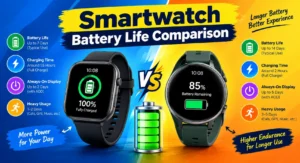
- Extended Battery Backup: Runs anywhere from 7 days up to 14–21 days on a single charge.
- Higher Sensor Accuracy: More board real estate can be dedicated to precision heart-rate arrays, optical SpO2 sensors, and multi-band GPS modules.
- Slimmer Profile: Absence of speaker cavities allows for thinner, lighter case designs that are comfortable to wear while sleeping.
✔Pros:
- Zero Charging Anxiety: Ensure for frequent traveling, outdoor trekking, or those who don’t like to deal with daily charging cables.
- Enhanced Environmental Protection: A higher water pressure resistance (usually full 5ATM/100m waterproof).
- Consistent Biometrics: Data tracking is uninterrupted as you don’t have to take the watch off every other night for charging.
❌Cons:
- No Direct Voice Interaction: You can reject calls and/or mute the ringing tone, but you can’t answer them.
- Manual Phone Retrieval: Involves taking your cell phone out of your pocket every time a call comes in.
The Verdict: At the very basic level, smartwatches are great for sports enthusiasts and minimals for fitness tracking, sleep monitoring, and battery life that lasts for a few weeks, which is a core highlight of any smartwatch comparison guide.
Head-to-Head Specification Table :📋
To give you an accurate market picture, here is a detailed, side-by-side comparison of technical specifications and realistic expectations for the Indian market:
| Feature / Metric | Calling Smartwatch Category | Standard Smartwatch Category |
|---|---|---|
| Primary Focus | Voice Communication & Quick Alerts | Fitness Telemetry & Battery Endurance |
| Typical Battery Backup (Light Use) | 4 to 7 Days | 10 to 14 Days |
| Battery Backup (Heavy / Calls) | 1.5 to 3 Days | 7 to 10 Days |
| Audio Hardware | Built-in Mic + Speaker + ENC Chipset | No Mic / No Speaker (Buzzer only) |
| Water Resistance Rating | IP67 or IP68 (Splash/Sweat proof) | IP68 or 5ATM / 100m Swimming Grade |
| Dialer / Contact Sync | On-screen Dialpad + 10 to 100 Contacts | Incoming Call Alert / Reject / Mute |
| Average Weight Range | 42g – 58g | 30g – 45g |
| Built-in Standalone GPS | Rarely under ₹3,500 (Available >₹4,000) | Commonly available in mid-tier models |
| Approx. Price Range | ₹1,199 to ₹25,999+ | ₹1,499 to ₹15,990+ |
Section Verdict: While calling watches win on multi-functional hardware features, standard smartwatches deliver superior raw hardware efficiency, lighter wrist feel, and longer battery lifecycle per charge cycle. This parameter testing is similar to what you look for in a smartphone side by side comparison india spec test.
Real User Insights & Community Feedback (Reddit & Quora Digest) 🙋♂️
When you look at Indian tech communities on Reddit (r/GadgetsIndia, r/Smartwatches) or Quora in detail, you can see there are definite practical trends in the Indian user base that the specifications sheets don’t convey:
- The “Traffic Noise” Realization: Reddit users often complain that the “Traffic Noise” Realization is quite audible in their bedroom or office environment, but becomes inaudible when using a scooter or walking on busy Indian roads. The Samsung Galaxy Watch8 is better suited to the outdoors with dual-mic noise canceling.
- Battery Degradation Over Time: Several quora threads point out that budget voice stream calling watches degrade their battery health after 10–12 months of constant Bluetooth 5.3 voice streaming.
- The “Gimmick vs Utility” Debate: Buyer Persona 1 and 2 identified through community feedback. Wrist-calling is a must for all professionals, delivery executives, and drivers. Runners and gym enthusiasts, however, tend to be more of the “light and simple” type, and usually want to have a standard watch that is light and has good accuracy with heart-rate zone alerts.
Section Verdict: Wrist calling is a crucial element of the system and is of great benefit for rapid indoor communication or when hands are already busy, but in outdoor settings in noisy environments it will be necessary to have higher level models with good noise cancelling.
Top Models to Consider in India (With Genuine Pricing) :💪
If you are interested in a calling watch or a regular watch, the following are the best watches on offer in the top-rated price range in India:
Top Calling Smartwatch Picks:
- boAt Wave Call 3: High-value entry-level option with a crisp display, basic Bluetooth calling, and IP68 rating. Genuine Price: ₹1,099
- Fastrack Limitless FS2 Pro: Stylish option featuring a 1.96-inch AMOLED screen, single-chip BT calling, and smooth UI. Genuine Price: ₹2,099
- Fire-Boltt Gladiator Plus: Feature-rich budget pick offering a rugged metallic frame, clear speaker performance, and multiple sports tracking profiles. Genuine Price: ₹1,499
- CMF Watch Pro 2: Clean software experience, sleek circular functional crown design, bright display, and stable calling quality. Genuine Price: ₹3,999
- Samsung Galaxy Watch8: Premium flagship Android wearable featuring advanced wear OS app ecosystem, precise ECG/Bio-sensors, and clear calling support. Genuine Price: ₹25,999
Top Standard / Fitness-Focused Smartwatch Picks:
- Samsung Galaxy Fit3: Sleek aluminum build, excellent 13-day battery backup, and precise health tracking metrics without active voice calling bloat. Genuine Price: ₹2,999
- Garmin Forerunner 55: Dedicated sport watch with high-accuracy GPS, multi-week battery life, and comprehensive running analytics designed for fitness enthusiasts. Genuine Price: ₹15,990
Clearly, Samsung Galaxy Watch8 and Watch Active are differentiated by their extreme features and performance as well as catering to the high-end markets, while Samsung Galaxy Watch Active is recognized as a high benchmark of overall Android connectivity. The Samsung Galaxy Watch8 is the top choice in the category of full-featured smartwatches, and budget options offer typical calling capabilities at a lower price, as noted in any comprehensive smartwatch comparison guide.
Verdict: BoAt, Fastrack and Fire-Boltt come with entry-level price tags for providing Bluetooth calling, whereas the Samsung Galaxy Watch8 is equipped with a smart ecosystem and comes with high-end voice quality. You can also evaluate these alongside a smartphone side by side comparison india spec test for mobile ecosystem sync.
Buying Guide: Factors to Check Before Buying in India 🚧
When it time to buy your next smartwatch, go through this list and make sure you are getting your money’s worth.
1. Display Brightness (Peak Nits) : Sunny weather in India demands for bright displays. Find 500+ nits brightness on TFT/LCD displays or at least 600-1000+ nits brightness with Always-On Display (AOD) support on AMOLED panels.
2. Microphone & Speaker Placement : Look for user reviews on the Environmental Noise Cancellation (ENC) features. If your camera isn’t positioned correctly, you’ll hear wind blowing into the camera, which will make it difficult for the person on the other end to hear you.
3. Companion App Stability : The smartwatch is as effective as the application that it supports (NoiseFit, boAt Crest, Samsung Health or Zepp). Make sure that the app syncs reliably in the background and doesn’t kill aggressive battery savers on Android phone (like Xiaomi, Realme, or Samsung device).
4. Real Water Resistance vs Marketing Labels : For heavy sweating during exercise, or to wear during the monsoon season, opt for an IP68 waterproof watch rating as basic. If you are active in the water, or in water sports, select a 5ATM water resistant device.
Section Verdict: If you’re looking to handle the Indian climate with ease, look for Apps that will sync with your other companion apps, water or companion resistant (600 nits or more), and high peak display brightness. Finding the right gear often involves checking a smartphone side by side comparison india spec test alongside smartwatch features.
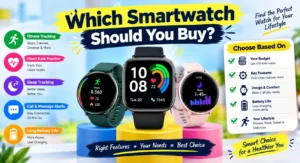
Final Conclusion & Final Verdict :🙌
Ultimately, it is up to the individual routine and lifestyle needs to determine what type of smartwatch to go with, a calling smartwatch, or a regular smartwatch.
- Buy a Calling Smartwatch if: You spend a lot of time on the move, commute regularly, receive a lot of calls or wish to have the ability to communicate hands-free without having to grab the cell phone each time your pocket vibrates.
- Buy a Standard Smartwatch if: You are an avid runner or athlete who cares deeply about precise heart-rate data, charge it once a fortnight rather than a few days, and are pursuing a minimalist device that’s more about health and fitness than anything else.
If you spend time assessing your daily activity based on these priorities you will be able to choose which wearable to wear to your wrist and how much budget to allocate, especially when supported by a smartwatch comparison guide and a reliable smartphone side by side comparison india spec test.
🔗
📌”Garmin India — Official Product Page”👈
