Description Box :🔍
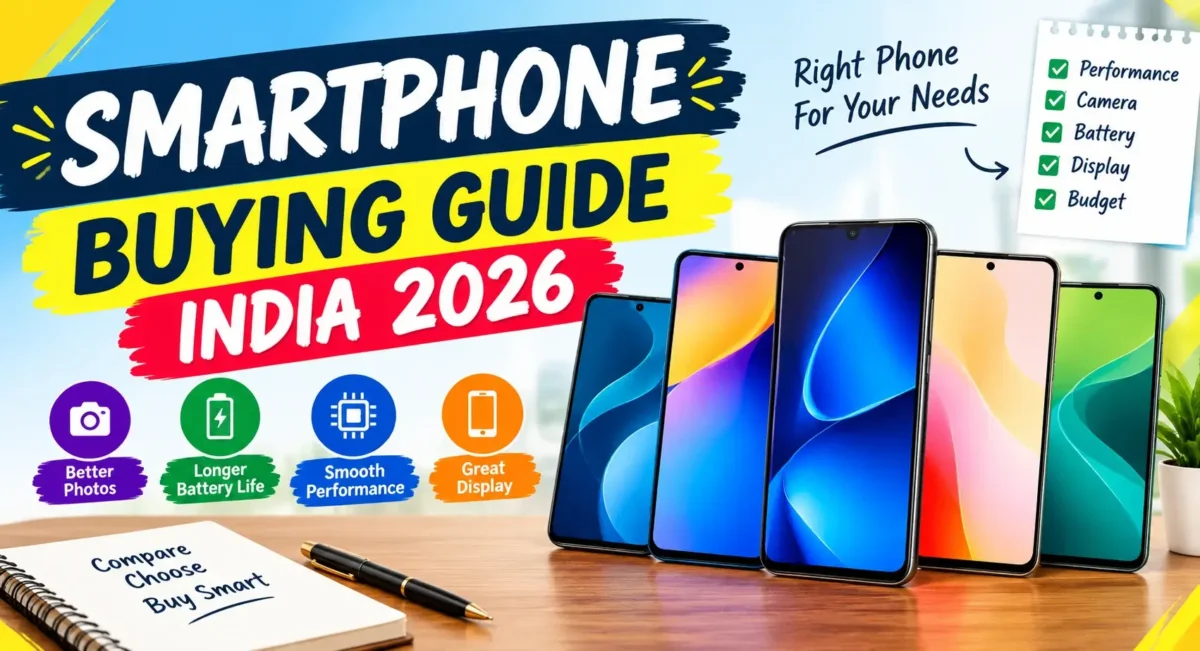
Ultimate smartphone buying guide india 2026 debunks the jargon and marketing hype around smartphones and provides you with facts about all the important specs. Whether it’s thermal throttling during Indian summers or display PWM dimming, silicon-carbon batteries or reliability over long periods of OS updates, this comprehensive smartphone buying guide india provides community-backed information from Reddit and Quora combined with hands-on findings from the benchmarks. If you are searching for the best 5g camera phones under 30000 india or a reliable daily driver, find exact specs to buy in each price range in India.
Smartphone Buying Guide India: Specs That Actually Matter
The smartphone buying experience in India has drastically changed in 2026. There are no longer any rules to follow that the more megapixels, the more RAM, and the more dynamic islands, the better. So when you’re picking your next phone using this smartphone buying guide india resource, don’t get seduced by being sold a beautiful brochure: There are some specs that matter and some that don’t, thermal throttling in the hottest summer months of the year, whether or not features are included in custom UI skins, and differences in 5G band support.
From a reliable day-to-day driver under Rs.15,000 to the best 5g camera phones under 30000 india and completely graphic-oriented flagships priced above Rs.70,000, this in-depth hardware, software sustainability, service centre reality and exact specification breakdown provides you with the real-world facts and figures of what truly affect your daily user experience.
1. Quick Overview: The State of the Indian Smartphone Market 🧧
In 2026, the smartphone industry in India will be mature and sophisticated in terms of user expectations. Purchasers are not upgrading their devices on an annual basis, but rather keeping them for 3-4 years. As a reaction, manufacturers have turned their attention to structural durability, higher energy density (silicon-carbon batteries) and longer software support guarantees.
But the artificial intelligence capabilities are frequently marketed as a gimmick, increasing the price, and important hardware features – for example, storage read write speeds, key thermal dissipation, camera lens coatings – are reduced in lesser-branded models. The knowledge of the areas where manufacturers cut corners is key to the informed buying process.
Section Verdict: Don’t purchase a gadget based on short-lived AI hacks or maximum benchmark results. Focus on sustained performance, structural durability, and display eye safety, as these directly affect the usability of the device over a 3-year ownership period.
2. Display & Ergonomics: Beyond Just “AMOLED” Marketing 📱
Almost all the smartphones available in India with price more than ₹12,000 boast of AMOLED display but there is a significant difference between the budget implementation and flagship displays.
Key Display Metrics That Matter: 😲
- LTPO vs. Static High Refresh Rate: A static 120Hz display consumes a lot of battery power even when reading a text that doesn’t change. LTPO (Low-Temperature Polycrystalline Oxide) panels will adapt refresh rates between 1Hz and 120Hz, saving a lot of battery life.
- Real-World Outdoor Brightness: “Peak brightness” specifications (such as 4500 nits) are typically only valid for brief video highlights in HDR in the real world. For India, look for High Brightness Mode (HBM) with a minimum rating of 1200 nits to ensure that the screen is easy to read in direct sunlight.
- PWM Dimming & Eye Protection: High frequency Pulse-Width Modulation (PWM) dimming (2160Hz or more) protects your eyes from fatigue and headache when you use your phone at night or in low-light conditions.
- Glass Protection: Check for Corning Gorilla Glass Victus 2 or Panda Glass to avoid the risk of dropping the screen and damaging it.
Verdict: The higher the HBM brightness rating (1200+ nits in India is more important than exaggerated peak nits), the more important is 2160Hz PWM dimming to the eye for comfortable daily use, rather than curved edges on the screen for accidental palm touch or peak nits.
3. Performance & Thermals: Processors, RAM Types & Indian Heat 🔥
Smartphone Processor and RAM Guide : Mobile processors have a special challenge in Indian climatic conditions. Packs that ship very well in cold lab conditions will throttle real bad when playing games or shooting a 4K video in the outdoors when the ambient room temperature is high.
Decoupling Processor Names from Real-World Speed: 🚀
- Chipset Architecture: Today’s 4nm and 3nm manufacturing processes by TSMC are much more power efficient than prior nodes. Whether it’s Qualcomm Snapdragon or MediaTek Dimensity, both of them are quite efficient when it comes to power usage especially when they are supported by the proper cooling system.
- Vapor Chamber Cooling Area: Make sure that the product has a separate vapor chamber cooling area of stainless steel or 3D. High end chipsets lose as much as 40% of their performance within minutes if they are not properly cooled.
- Memory Standards (UFS & LPDDR): The amount of RAM is less important than its speed. The 12GB LPDDR4X phone with slow UFS 2.2 storage will pale in comparison to an 8GB LPDDR5X phone with fast UFS 4.0 storage in terms of app loading, multi-tasking, and overall system performance in the long run.
Verdict: Always choose UFS 3.1 or UFS 4.0 storage speed and use a good vapor chamber cooling system over high RAM marketing numbers (like 16GB virtual RAM, which reduces storage wear life).
4. Camera Setup: Sensor Quality vs. Megapixel Gimmicks 📸
The number of megapixels is simply a measure of resolution, not image quality. When analyzing options for the best 5g camera phones under 30000 india segment, the primary camera’s sensor size matters most. The primary camera has a large sensor size and 50MP.
How to Evaluate Camera Hardware correctly: 🤔
- Sensor Size & Brand: Try to find primary sensors such as Sony LYTIA series (1/1.56″, 1/1.56-1, 1/1.56-2, etc.) or SAMSUNG ISOCELL main sensor of physical size 1/1.56″ or more.
- Optical Image Stabilization (OIS): OIS is essential for tack sharp low-light photography and video shooting while the camera is in your hand. Refrain from phones that are only using Electronic Image Stabilization (EIS) for more than ₹15,000, especially if you are hunting for the best 5g camera phones under 30000 india.
- Secondary Lenses: Steer clear of any devices that have the filler 2MP macro or depth sensor to advertise a “triple camera setup.” There is a much larger amount of real world benefits in having a high quality 8MP or 12MP ultra-wide sensor with autofocus.
- Image Signal Processor (ISP): The 4th is Image Signal Processor (ISP) which is a chip that performs computational photography. High dynamic range scenes are not artificially over-saturated by dedicated ISPs.
Verdict: “A large Sony/Samsung sensor and one good 50MP primary camera with Optical Image Stabilization (OIS) is better than a marketing combo of 100MP+ sensors and worthless 2MP secondary lenses.”
5. Battery & Charging: Anode Tech, Lifespan & Thermal Health 🔋
Thanks to new Silicon-Carbon (Si-C) anode technology, battery capacity has increased from the standard 5000mAh and now phones can be packed with 5500mAh to 6000mAh in thin and light frames.
- Fast Charging Realities: 80W fast charging to 120W fast charging is convenient, but high wattages tend to create a lot of heat during the summer in India, and this can impair battery health over time. Search for intelligent algorithms that slow down vehicles depending on the weather.
- In-Box Charger Policy: Check to see if the wall adapter is in the retail box. Samsung and Apple charge extra for specific chargers, which makes the overall expenditure between ₹1,500 and ₹3,000.
- Battery Cycle Ratings: Ensure they have a rating of at least 1600 charge cycles and are capable of keeping 80% of their original capacity (about 4 years of daily charging).
Section Verdict: A 67W–80W fast charging support with intelligent thermal protection and a 5500mAh+ silicon-carbon battery will be more preferable than extremely high charging wattages which will lead to battery degradation over time.
6. Software Experience, Ads & Update Commitments 🔒
The strength of the hardware system can be undermined with weak software delivery. In the Indian market, operating systems can be heavily modified with intrusive background app management, bloatware and lock screen advertisements.
Evaluating Modern Android Skins:
- Clean UI Options: Stock Android, Motorola MyUX/Hello UI and Nothing OS offer ad-free, clean, minimal interface.
- Feature-Rich Skins: Excellent productivity features, long update cycles, robust security (Knox), and feature-rich skins – Samsung One UI. Samsung One UI has excellent productivity features, long update cycles, robust security (Knox), and feature-rich skins – but the entry-level models may experience UI stutters.
- Ad-Heavy Systems: System skins on lower budget devices may include Glance lockscreen ads, push notifications from system apps and preloaded bloatware that can be uninstalled or disabled through system settings.
- OS Update Policies: Check for at least 3 years of major OS updates and 4 years of security patches to keep your banking apps secure over time.
Verdict: Clean software (Nothing OS, Motorola, Samsung One UI) is a clear winner: seamless performance and security compliance and spam-free notifications with a 3+ year update commitment.
7. Real User Insights: What Reddit & Quora Communities Are Saying 🙋♂️
However, reading the threads on Internet Reddit (r/IndiaTech, r/oneplus, r/Xiaomi) and Quora shows that there are several practical issues that are often neglected in tech specs:
- Display Green Line Vulnerabilities: Indian buyers often complain about display failures after software updates. Brands with extended or lifetime free screen replacement policies for display line problems are inspiring much greater consumer trust, as emphasized by users on Reddit.
- Service Center Realities: Spare part availability (for example back glass, battery, display panels) in other cities than metro cities is very different, as highlighted by the quora discussions in the point 2. Brands that have broader service networks are likely to provide much easier post-warranty repairs.
- Real-World Battery Drain on 5G: Indian users routinely report that 20% to 30% more battery is consumed when constantly searching for 5G networks in semi-urban settings compared to conventional 4G networks. Power users’ life depends on silicon-carbon battery capacities.
- Bloatware and System Updates: The community often notes that “aggressive” software updates on budget phones may introduce system bugs or reduce camera quality. The user communities are very strongly in favor of holding off 7 to 10 days after the OS update release to install it.
The bottom line: While the actual numbers are important, purchaser satisfaction with post-purchase customer service, screen replacement cycles, and software devoid of buggy updates are just as relevant.
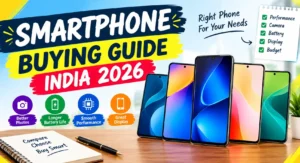
8. Key Price Segment Breakdown :💪
For easy decision making, we’ve split the market into various price buckets in this smartphone buying guide india edition, with the iQOO Z9 5G being a classic example of a device that offers a perfect balance of performance, camera capabilities and value.
👉Segment 1: Under ₹15,000 (Essential Performance)
- Target Expectations: Full HD+ 120Hz screen, 5000mAh battery, support for 5G band (8+), support for 4GB – 6GB RAM, decent main camera.
- Common Compromises: Plastic build, 18W-33W slower charging rates, mono speakers, monochrome secondary cameras.
👉Segment 2: ₹15,000 to ₹25,000 (The Sweet Spot)
This unit is the best cost/benefit for most Indian users.
- Primary Featured Highlight: The iQOO Z9 5G is truly a highlight of the segment at a very affordable price of ₹19,999. Running on the MediaTek Dimensity 7200 chipset, iQOO Z9 5G clears more than 730,000 marks on the AnTuTu benchmark making it a strong contender for both gaming and everyday multitasking.
- Camera & Display Setup: The iQOO Z9 5G has a Sony LYT-600 sensor with Optical Image Stabilization (OIS), resulting in crisp photos in low-light settings. The 120Hz AMOLED display, having 1800 nits peak brightness, makes it easy to see on the brightest of days in India.
- Long-Term Utility: The iQOO Z9 5G has a slim 7.83mm profile, 5000mAh of battery life, and fast 44W FlashCharge for users in India who want longevity without going over budget.
👉Segment 3: ₹25,000 to ₹45,000 (Upper Mid-Range & Flagship Killers)
This category is where buyers heavily evaluate the best 5g camera phones under 30000 india to get premium camera hardware without crossing into flagship prices.
- Target Expectations: Metal frames, high-grade LTPO screens, high-quality Sony camera sensors, UFS 3.1/4.0 storage, high IP ratings (IP68) and speedy charging (67W-100W).
- Key Models in Segment: OnePlus Nord series, Nothing Phone series, Realme GT series.
👉Segment 4: Above ₹50,000 (True Flagships)
- Target Expectations: The ones they’ve listed include targeting top-tier Snapdragon 8 Gen series / Apple A-series chips, custom telephoto periscope lenses, wireless charging, IP68 water protection, premium glass/titanium builds, and 4 to 7 years of full OS software updates.
- Key Models in Segment: Samsung Galaxy S series, Apple iPhone series, Vivo X series.
Verdict: For most Indian consumers, the ₹18,000–25,000 price range is where they will find 90% of the flagship experience for a significantly lesser price, with performance-centric smartphones like iQOO Z9 5G being the standout choices.
9. Ultimate Specification Matrix 📋
This high-research specification matrix in our smartphone buying guide india outlines the baseline hardware you should demand in each price tier in India for 2026, especially when filtering through the best 5g camera phones under 30000 india:
| Feature / Metric | Under ₹15,000 | ₹15,000 – ₹25,000 | ₹25,000 – ₹45,000 | Above ₹50,000 |
|---|---|---|---|---|
| Ideal Primary Model | Budget 5G Options | iQOO Z9 5G | Flagship Killer Tier | Premium Flagships |
| Approx. Market Price | ₹12,499 – ₹14,999 | ₹19,999 | ₹29,999 – ₹42,999 | ₹54,999 – ₹1,29,999 |
| Display Spec | 6.67" FHD+ 120Hz LCD / AMOLED | 6.67" FHD+ 120Hz AMOLED (1800 Nits) | 1.5K LTPO 120Hz AMOLED | 2K LTPO 1-120Hz Dynamic AMOLED |
| Processor Benchmark | Dimensity 6100+ / Snapdragon 4 Gen 2 | MediaTek Dimensity 7200 (AnTuTu ~730K+) | Snapdragon 8s Gen 3 / Dimensity 8300 | Snapdragon 8 Gen 3 / Apple A18 Pro |
| RAM & Storage Type | 6GB LPDDR4X + 128GB UFS 2.2 | 8GB LPDDR4X + 128GB/256GB UFS 2.2 | 8GB/12GB LPDDR5X + UFS 3.1/4.0 | 12GB/16GB LPDDR5X + UFS 4.0 |
| Main Camera Spec | 50MP Primary (EIS) | 50MP Sony LYT-600 (OIS) + 2MP Bokeh | 50MP Sony LYT-808 (OIS) + Ultra-wide | 50MP Custom 1-inch / Periscope Telephoto |
| Battery & Charging | 5000mAh + 18W–33W | 5000mAh + 44W FlashCharge | 5500mAh + 67W–100W | 5400mAh–6000mAh + Wireless Charging |
| OS & Update Plan | Android 14/15 (2 Yrs OS) | Funtouch OS 14 (2 Yrs OS / 3 Yrs Security) | Clean UI / OxygenOS (3 Yrs OS) | One UI / iOS / Stock (4–7 Yrs OS) |
10. Pros & Cons of Current 2026 Smartphone Trends
✔Pros:
- Silicon-Carbon Battery Breakthroughs: Slim, ergonomic batteries with high capacities (5500mAh – 6000mAh) are now coming into use.
- OIS Democratization: Now optical image stabilization is available in phones for under ₹20,000, making it easier to find the best 5g camera phones under 30000 india.
- Extended Software Support: Brands are pledging to more extended security and OS patching support for mid-range devices.
- High Outdoor Brightness: AMOLED display panels that are found in most mid-range phones are much easier to read in bright sunlight.
❌Cons:
- Charger Removal Trend: More mid-range brands are eliminating wall chargers from the retail offer, increasing the cost of the purchase.
- Useless Secondary Sensors: Manufacturers still keep adding low cost 2MP macro or depth lenses to tout multi-camera solutions.
- Complex System Bloatware: Budget custom UI skins have preloaded applications and notification spams that continue to exist without being disabled.
- Slight Price Creep: Modest increases were observed for slight price creep because of global component costs for base storage configurations.
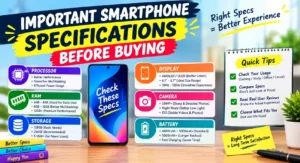
11. Final Verdict & Conclusion :🙌
When it comes to selecting the right smartphone in India in 2026, it’s not about the hype and marketing talk but about aligning your key everyday use cases with proven specs.
The main priorities are a good display with eye safety functionality, a 4nm processor optimized for power, cooling system, main camera with physical OIS and a clean software history. The iQOO Z9 5G is a perfect example of how you don’t have to pay a flagship price to get speedy performance, battery efficiency and sharp photography in India.
Research and read the opinions of others on Reddit and Quora on how long they’ve been using the device and whether it has been stable over time, check if the local service centers are readily available in your city or town, and purchase it at a major holiday sale when bank discounts are offered and exchange offers are plentiful.
Key Takeaways Checklist for Indian Buyers: 👇
- Check Storage Type: If you have a budget of more than ₹25,000, then you should check Storage Type as UFS 3.1 or higher.
- Verify OIS: Avoid buying a handset with a primary camera above ₹15,000 without OIS.
- Inspect Display Nits: If it has a display nits of more than 1200 nits, it will be visible outdoors.
- Confirm Update Commitments: Make sure that the Android OS and security patches last for at least 2–3 years.
- Factor in Accessories: If a fast charger and protective case are packaged with the product in the retail box.
🔗
📌”OnePlus India — Official Website Link”👈
